
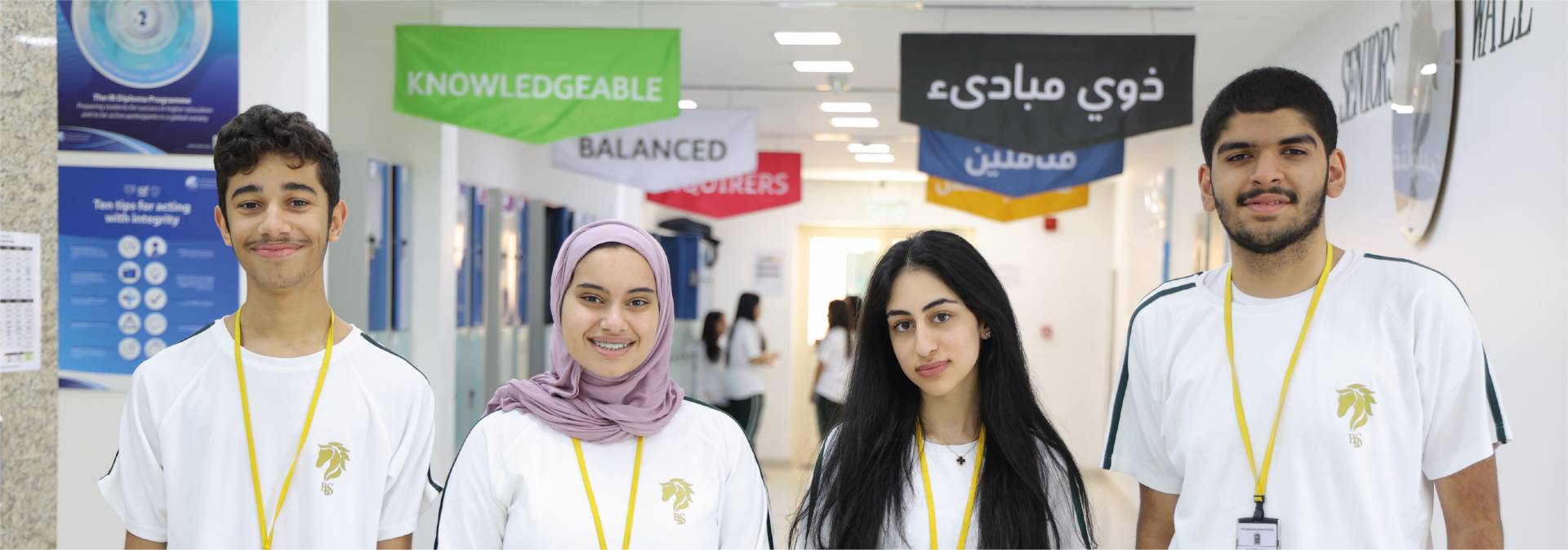
Overview
The International Baccalaureate Diploma Programme (IBDP) is a rigorous two-year course of study designed to prepare students for university and life beyond. Since its inception in 1968, the IBDP has gained international recognition as a high-standard college preparatory curriculum. As of May 2025, the program includes over 3,500 schools worldwide, reflecting its growing global presence.
In May 2025, there were approximately 180,000 IB candidates participating in the program, showcasing a steady increase in interest and enrollment. To support the program’s integrity, more than 14,000 trained IB examiners assess student coursework, ensuring the internal grading consistency that is a hallmark of the IB system.
While the IB Programme is not designed exclusively for elite or gifted students, it is particularly suited for those who are highly motivated, open-minded, and responsible. Students pursuing an IB Course Certificate or the full IB Diploma should be prepared for the challenges and rewards that accompany this demanding academic experience.
IB Program in Bayan
Certified as an IB school since 1993, Bahrain Bayan School (BBS) is proud to offer this prestigious programme, and to make the IB curriculum the basis for nearly all classes offered in Grades 11-12. The BBS faculty and staff are committed to continue to improve the implementation of the demanding curriculum, and to fulfill the vision it was founded upon.
Please click on the picture below to view Bahrain Bayan School's profile in the IB World Schools Yearbook:
Grading
Each examined subject is graded on a scale of 1 (minimum) to 7 (maximum). The award of the Diploma requires a minimum total of 24 points.
The effectiveness of the IBDP is not only due to the depth of the individual courses, but also to the comprehensive nature of the Programme as a whole.
IB Diploma Track
Unlike other honors programmes, the IBDP requires each student to take courses in six academic areas. To qualify for the IB Diploma, students must take examinations in six subject areas, participate in the Creativity, Action, and Service (CAS) Programme, and write an extended essay (EE) during Grade 11 and 12.
The Diploma candidate must also take a unique course known as Theory of Knowledge (TOK). In this course, students explore the connections and similarities between the various subjects, learn to think, and apply interrelated concepts. Many students earning the IB Diploma are awarded advanced college credits at prestigious universities around the world. Many highly competitive colleges and universities recognize the IB Diploma for admissions and/or advanced standing.
Completion of the IB Diploma requires that students complete coursework and formal exams in six subject areas. These are studied concurrently, and students are required to study both the Humanities and the Sciences.
Diploma candidates must select two subjects from Group 1, and one subject from Groups 3-6. A subject from Group 3-5 may be substituted for Group 6. At least three but not more than four are taken at Higher Level, while the others are Standard Level.
IB Course Track
Students in Grade 11 have the ability to choose pursuing in certain IB Courses according to their interests and abilities. These students can choose any course, and must participate in the official IB Examination to be able to receive an IB Certificate in the chosen course.
Students in Grade 11 have the ability to choose pursuing in certain IB Courses according to their interests and abilities. These students can choose any course, and must participate in the official IB Examination to be able to receive an IB Certificate in the chosen course.
IB Diploma Requirements
To be eligible for the IB Diploma at the end of the senior year, candidates must fulfill the following during Grades 11 and 12:
❶ Successfully complete prescribed coursework, and take an examination from each of the course groups:
GROUP 1 – Studies in Language and Literature
GROUP 2 – Language Acquisition
GROUP 3 – Individuals and Societies
GROUP 4 – Experimental Sciences
GROUP 5 – Mathematics
GROUP 6 – The Arts
❷ Complete the three core elements:
Submit an Extended Essay (EE) of 4,000 words in one of the subjects of the IB curriculum.
Complete the Theory of Knowledge (TOK) course
Complete Creativity, Activity, and Service (CAS) according to IB guidelines
Difference between Higher Level (HL) and Standard Level (SL)
In the IB curriculum, students can choose to take courses at Higher Level (HL) or Standard Level (SL), depending on their interests and abilities. HL courses cover more material and require approximately 240 class hours, while SL courses focus on fewer topics and require about 150 class hours. Although some subjects may differ significantly in difficulty, for most, the primary distinction lies in the amount of content covered rather than the level of challenge. Students opting for HL should be highly motivated and organized, as they face additional challenges compared to SL students. Furthermore, universities often grant more credit or exemptions for HL courses, recognizing their advanced nature. When deciding between HL and SL, students should carefully consider their strengths, interests, and university entrance requirements, and they can seek guidance from experienced IB teachers at BBS to understand the expectations and challenges of each level.
Offered IB Courses
Offered IB Courses
At BBS, all IB subjects are taught over a two-year period, and IB examinations are given each May. The subjects are continually reviewed and revised to meet contemporary needs. Bahrain Bayan School is committed to offering a variety of courses that match our students' interests and abilities.
Current IB courses that are offered for Grades 11 and 12:
- GROUP 1 – Studies in Language and Literature
- English A Language & Literature HL & SL
- Arabic A Language & Literature HL & SL
- GROUP 2 – Language Acquisition
- Arabic B Language Acquisition HL
- GROUP 3 – Individuals and Societies
- Business Management HL & SL
- Economics HL & SL
- Psychology HL & SL
- History SL
- History of Europe HL & SL
- GROUP 4 – Experimental Sciences
- Biology HL & SL
- Physics HL & SL
- Chemistry HL & SL
- Environmental Systems & Societies HL & SL
- Computer Science HL & SL
- GROUP 5 – Mathematics
- Math Analysis & Approaches HL & SL
- Math Applications & Interpretation SL
- GROUP 6 – The Arts
- Visual Arts HL & SL
- Theatre Art HL & SL
- Additional Subject from group1 to 5
Important Notes
- Some courses may not be offered due to insufficient student enrollment.
- It is not always possible to accommodate all course selections due to scheduling conflicts. Every effort will be made to accommodate student preferences, but sometimes compromise choices must be made by the students.
IB Students' Well-Being
The International Baccalaureate (IB) is committed to fostering the well-being of its students as an integral part of its educational philosophy. Recognizing that student health—mental, emotional, and physical—is crucial for academic success, the IB promotes a holistic approach to education. Through programs such as the Creativity, Activity, Service (CAS) component, students are encouraged to engage in meaningful activities that contribute to their personal development and resilience. IB schools provide supportive environments where students can seek guidance and develop self-awareness, helping them to manage stress and maintain a healthy balance between their academic and personal lives. By fostering international mindedness and empathy, the IB prepares students to thrive in diverse communities and equips them with the tools to pursue lifelong well-being.
IB Learner Profile
IB Learner Profile
The aim of all IB programmes is to develop internationally minded people who, recognizing their common humanity and shared guardianship of the planet, help to create a better and more peaceful world.
As IB learners we strive to be:
INQUIRERS We nurture our curiosity, developing skills for inquiry and research. We know how to learn independently and with others. We learn with enthusiasm and sustain our love of learning throughout life.
KNOWLEDGEABLE We develop and use conceptual understanding, exploring knowledge across a range of disciplines. We engage with issues and ideas that have local and global significance.
THINKERS We use critical and creative thinking skills to analyse and take responsible action on complex problems. We exercise initiative in making reasoned, ethical decisions. COMMUNICATORS We express ourselves confidently and creatively in more than one language and in many ways. We collaborate effectively, listening carefully to the perspectives of other individuals and groups.
PRINCIPLED We act with integrity and honesty, with a strong sense of fairness and justice, and with respect for the dignity and rights of people everywhere. We take responsibility for our actions and their consequences.
OPEN-MINDED We critically appreciate our own cultures and personal histories, as well as the values and traditions of others. We seek and evaluate a range of points of view, and we are willing to grow from the experience.
CARING We show empathy, compassion and respect. We have a commitment to service, and we act to make a positive difference in the lives of others and in the world around us. RISK-TAKERS We approach uncertainty with forethought and determination; we work independently and cooperatively to explore new ideas and innovative strategies.We are resourceful and resilient in the face of challenges and change.
BALANCED We understand the importance of balancing different aspects of our lives-intellectual, physical, and emotional-to achieve well-being for ourselves and others.We recognize our interdependence with other people and with the world in which we live. REFLECTIVE We thoughtfully consider the world and our own ideas and experience.We work to understand our strengths and weaknesses in order to support our learning and personal development.
The IB learner profile represents 10 attributes valued by IB World Schools. We believe these attributes, and others like them, can help individuals and groups become responsible members of local, national and global communities.
ATL skills
Approaches to Learning ( ATL) in the IB:
''The development of skills such as thinking skills and communication skills is frequently identified as a crucial element in preparing students effectively for life beyond school."
Teaching and learning must align with the requirements and philosophy of the programme. Teaching and learning in the Diploma Programme (DP) engages students as inquirers and thinkers; promotes the understanding and practice of academic honesty; addresses the diversity of students; develops IB learner profile attributes; and addresses language needs, including those for students learning in a language(s) other than mother tongue.
Developing students’ approaches to learning (ATL) skills is about more than simply developing students’ cognitive skills. It is also about developing affective and metacognitive skills, and about encouraging students to view learning as something that they “do for themselves in a proactive way, rather than as a covert event that happens to them in reaction to teaching” (Zimmerman 2000: 65). By developing ATL skills and the attributes of the learner profile, DP students can become “self-regulated learners” (Kaplan 1998). Self-regulated learners have learned how to set learning goals, ask good questions, self-interrogate as they learn, generate motivation and perseverance, try out different learning processes, self-monitor the effectiveness of their learning, reflect on achievement, and make changes to their learning processes where necessary (Zimmerman and Schunk 1989; Wolters 2011; de Bruin et al 2011).
The ATL skills are grouped into five categories:
• Thinking skills
• Communication skills
• Social skills
• Self-management skills
• Research skills.
Although these skills areas are presented as distinct categories, there are obviously close links and overlap between them. It is intended that these categories should be seen as interrelated as well as linking closely with the attitudes and dispositions highlighted in the IB learner profile.''
( 2015 Diploma Programme: From Principles into Practice Guide. pages 64-66)
IB Grading Scheme
Officially, Bayan School uses traditional grading on students' report cards and transcripts in Grades 6 to 12. However, official IB scores are standard scores.
Official IB Scores
- IB Diploma Students
Each examined subject is graded on a scale of 1 (minimum) to 7 (maximum). The award of the Diploma requires the following:
- A minimum total of 24 points for all subjects (with Bonus Points)
- A minimum total of 12 points for Higher Level Courses
- A minimum total of 9 points for Standard Level Courses
- Complete CAS, TOK, or EE requirement.
Students will not receive their IB Diploma in the following cases:
- Failure to meet the above requirements
- Recieving an "E" in the TOK, or the Extended Essay
- Recieving a grade of "1" in any subject
- Recieving a grade of "2" in three or more courses in HL or SL.
IB Course Students
Students taking IB Courses but are not part of the IB Diploma program are required to the following in order to recieve their IB Certificate in the chosen course:
- Score 3 points or higher for HL courses
- Score 2 points or higher for SL courses
Students taking IB Courses but are not part of the IB Diploma program are required to the following in order to recieve their IB Certificate in the chosen course:
- Score 3 points or higher for HL courses
- Score 2 points or higher for SL courses
ToK & EE Bonus Points
Within the IB Diploma, the ToK, EE and CAS are requirements. Bonus points are awarded for the ToK and EE components only. A maximum of 3 bonus points can be obtained.
Please find below the matrix, adopted since May 2015, highlighting the combination of possible bonus points a candidate may achieve in the ToK and EE components:
| TOK/EE | A | B | C | D | E |
| A | 3 | 3 | 2 | 2 | Failing Condition |
| B | 3 | 2 | 2 | 1 | |
| C | 2 | 2 | 1 | 0 | |
| D | 2 | 1 | 0 | 0 | |
| E | Failing Condition | ||||
Internal IB Scores & Grades
Students enrolled in IBDP Standard and Higher Level Courses and in Enriched Courses are putting in great determination for success. Bayan school recognizes that these courses are more challenging and require greater effort and the grades must reflect the level of curriculum and effort exerted for these courses.
Therefore, student GPAs are enriched by 1 point for HL courses and 0.5 points for any SL course according to below table:
| % Grade | Letter Grade | Courses | IB SL (Grades 11 & 12) | IB HL (Grades 11 & 12) |
|---|---|---|---|---|
| 97 – 100 | A + | 4.3 | 4.8 | 5.3 |
| 94 - 96 | A | 4.0 | 4.5 | 5.0 |
| 90 - 93 | A- | 3.7 | 4.2 | 4.7 |
| 87 - 89 | B+ | 3.3 | 3.8 | 4.3 |
| 83 - 86 | B | 3.0 | 3.5 | 4.0 |
| 80 - 82 | B- | 2.7 | 3.2 | 3.7 |
| 77 - 79 | C+ | 2.3 | 2.8 | 3.3 |
| 73 - 76 | C | 2.0 | 2.5 | 3.0 |
| 70 - 72 | C- | 1.7 | 2.2 | 2.7 |
| 67 - 69 | D+ | 1.3 | 1.8 | 2.3 |
| 63 - 66 | D | 1.0 | 1.5 | 2.0 |
| 60 - 62 | D- | 0.7 | 1.2 | 1.7 |
| 0 - 59 | F | 0 | 0 | 0 |
BBS IB Publications and Announcements
Below are some of the publications sent out from the IB Office in Bayan School, if you need more information or have any concerns, kindly contact the IB Office.
BBS IB Policies
| Admissions Policy |
| Assessment Policy |
| Complaints Procedures |
| Inclusion Policy |
| Language Policy |
IB Policies & Guides
| Command Terms |
| Grade Descriptors |
BBS IB Calendars & Exam Schedules - 2025/2026
| IB May 2026 Examinations Schedule |
BBS IB Booklets
| IB Booklet 2025-2026 |
| 2025 Barcode of IB Guide Flipbook |
IB Extended Essay
EE BBS Guide- 2022-2023
| EE BBS Guide- Last Assessment 2026 |
| EE BBS Guide- Last Assessment 2027 |
What is EE
| What is EE |
IB Gallery
IB Gallery